
William Henry Webber 1880 – 1953 and Annie Frances Webber nee Vowles 1878 - 1965
William Henry Webber’s family life was uneventful until the start of the First World War (WWI), when the horrific loss of life soon affected them, as it did so many others. William then went on to live through the Second World War (WWII) as well, coping with the privations and difficulties of rationing and the black-out. His family, work and his faith were very important to him.
William Henry Webber’s early life
The story begins with William Henry Webber’s father, William Esau Webber. William Esau was the son of a small scale farmer and pig dealer, who lived in the rural village of North Newton, to the south of North Petherton. Although William Esau was raised in a rural environment, he was well educated and he found work as a clerk, rising to become a manager at the cement works in Dunball. Through the course of his work, William Esau met and married Maria Board, who was the niece of Bridgwater cement manufacturer John Board. Subsequently William Esau Webber became company secretary for John Board and Co.
William Esau and Maria settled close to the cement works in Dunball, where they started to raise their large family of ten children[i]. In 1881 they were living in part of a terrace called Dunball Villas, and this may have been the row of houses shown as ‘Board’s Buildings’ on the 1888 OS map. John Board and Co. operated both of the cement works shown in the middle of the map below, on either side of the railway line.
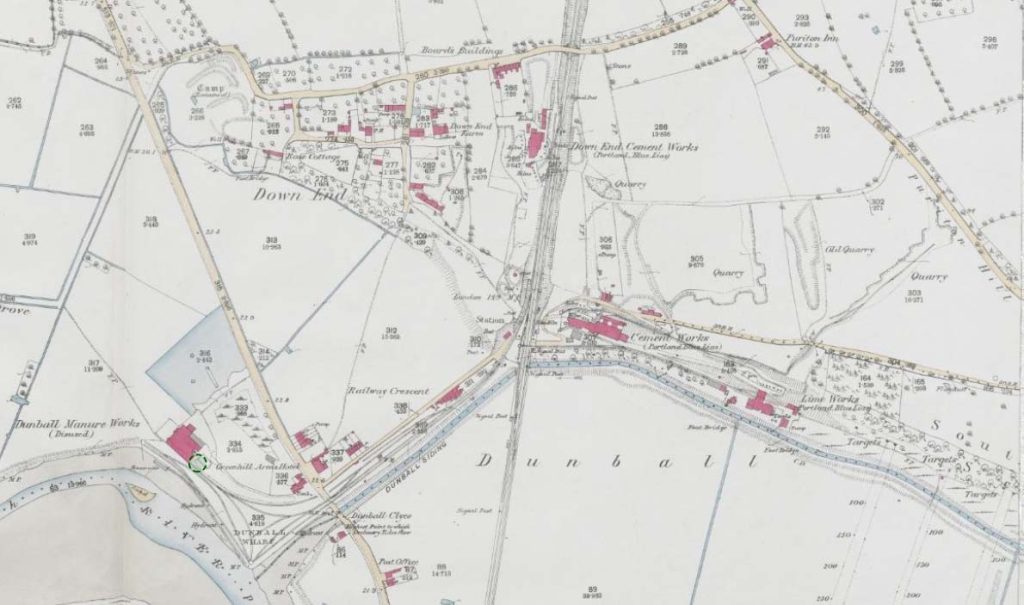
William Henry Webber was their third child and eldest son, and he was born at home in Dunball on the 14th of October 1880. He was baptised on the 5th of December in the parish church of St Michael and All Angels. By the 1891 census, the Webber family had outgrown the small terraced house and had crossed the bridge over the railway line to live in a house on the Riverton Road in Puritan. Their house was called Fair View Villa, and was close to the vicarage. It was away from the dust and noise of the cement works, but still close enough for William Esau to get to work quickly. In 1891, William Henry was one of eight siblings living at home with their parents, and Maria had her daughters and one servant to help in the house.
By 1901, William Henry had joined his father at work, and was an accountant at the firm of John Board and Co. He was still living at home, but the older children were getting ready to fly the nest.
Marriage
William Henry Webber married Annie Frances Vowles in Huntspill on the 31st of August 1909. By this time his father, William Esau, had retired, and William Henry took over his job, becoming company secretary of John Board and Co., aged only 29.
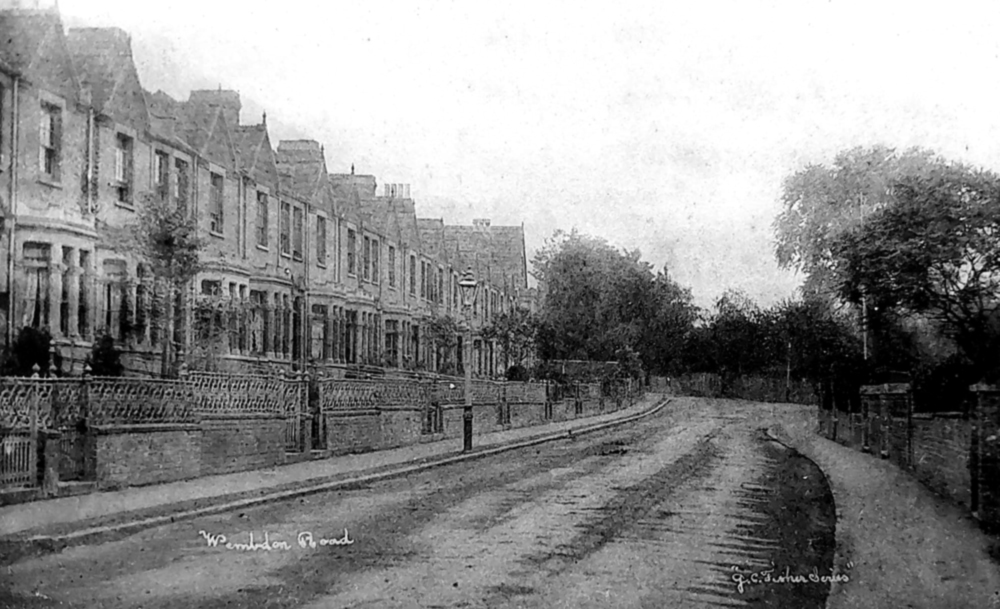
William and Annie now moved right away from the cement works in Dunball and set up their own home at 49 Wembdon Road, Bridgwater. William would have been commuting to the cement works at Dunball, although he may have often had to attend meetings in other places. John Board and Co. was now a limited company and so the position of company secretary was necessary. As company secretary, William was the advisor to the board on all financial and regulatory matters. This was a very important role, if William gave incorrect advice it could have serious implications for the company.
WWI
WWI was a very difficult time for the Webber family, as for so many others. William Henry himself would have been exempt from military service due to his essential role as company secretary, but he could have faced questions on the street and risked being presented with a white feather for cowardice. Groups of young women handed out these feathers to men wearing civilian clothes. The feathers were intended to shame men into enlisting, but people did not always fully understand that companies making essential supplies had to keep going as part of the war effort.
Three of William’s younger brothers all served in the army and the family paid a heavy price. William Henry and his parents must have felt desperate with anxiety as the news worsened.
Harold Percival Webber 1889 - 1915
Harold Percival Webber, Service number 2398, was a lance corporal in the 2nd Battalion, Royal Fusiliers. He enlisted on the outbreak of war, trained in Malta and from there went to Marseilles in early January 1915. He was killed in action near L’Epinette, Armentieres on the 13th of March 1915, aged just under 26 years. Harold was buried in a cemetery near Armentieres, and memorialised on the war memorial at St Michaels and All Angels, Puritan.
This loss must have had a terrible effect on William’s mother Maria. She died about five weeks later, on the 27th of April 1915, leaving William’s father to grieve for both his wife and son.
Leonard Alexander Webber 1893 - 1916
William’s youngest brother Leonard Alexander Webber also enlisted in the Devonshire Regiment. He died of wounds on the 9th of July 1916, near Etaples, France, and was buried in the Etaples Military Cemetery. He was 23 years old, and was a temporary Second Lieutenant. Once again, William Henry would have rushed from his home in Bridgwater to attempt to comfort his father after he had received the crushing news.
Cyril Donald Webber 1891 - 1962
Another of William’s brothers, Cyril Donald Webber, enlisted with the Devonshire Regiment. Cyril first entered a theatre of war in Egypt, on the 3rd of December 1915, nine months after Harold was killed. He survived the war and finished with the rank of captain. After the war, Cyril emigrated to Canada to join his older brother Sidney, who had moved there in 1907.
John Board and Co. and the struggle to keep going during WWI
In 1914, just before the start of hostilities, the company applied to alter their memorandum of association. This memorandum was a legal document, signed by the original shareholders or guarantors, which incorporated a limited company, either with or without share capital. John Board and Co. wanted to reduce the amount of capital originally declared, but also to extend the scope of their activities. In addition to their core business as brick makers, they wanted to trade in salt and coal, as many of their customers used these commodities. The judge in the Chancery Division of the High Court objected that these activities seemed a long way from their original business, but the company provided evidence that similar firms also traded in this way, and the majority of their shareholders favoured this scheme. Mr Justice Astbury rather grudgingly approved the scheme[ii]. As company secretary, William Webber would have been very much involved with this scheme, and would have been pleased and relieved when they had a favourable verdict.
Like other firms, John Board and Co. struggled to stay in business as their workforce disappeared off to war. Local newspapers reported their efforts to apply for exemptions from military service for key employees. In April 1916 the firm applied for exemptions for twenty two workers, their grounds being that over 50% of their workers had already gone to serve their country and they were now operating with the minimum workforce necessary to maintain their business. In spite of this, not all the exemptions were granted and more workers went off to war[iii].
A month later the firm were again applying for exemptions for seven men, complaining that they now only employed thirty-five men, compared to between 110 and 120 before the war. They now had thirty women employed in their salt works, a new and important venture since many towns were at present without salt. Also it was almost impossible to recruit more labour locally as the munitions factory at Dunball absorbed much of the local labour force. However, exemptions were only granted for five of the men, and this was a continuing problem for the remaining workers and management of John Board and Co. throughout the duration of the war.[iv]
Later that year, the firm applied for an exemption for a wages clerk, as ‘making up wages was an important matter. They had lost five of the staff and replaced them with two girls.’ They lost this appeal, but it shows how a minimum number of office staff were just as essential as the labourers[v]. William would have been closely involved in the frequent recalculation of costs and forward planning to try to keep the company afloat during this difficult time.
The inter war years
William Henry’s brother Victor trained as a pharmacist, this was a reserved occupation so Victor didn’t fight in the war. In 1921 he was married to Lillias nee Foulds, and working for Boots the Chemist in Edmonton, Middlesex. By 1925 Victor had moved to Ringwood in Hampshire, where he died in 1925, aged just 37. William Henry and his father arranged for Victor to be brought back to Puriton and buried in the churchyard of St Michael’s and All Angels, together with his mother Maria.
Councillor
After WWI, William turned his attention to the town council, as many local businessmen did. Being elected as a councillor had the dual benefit of being in a position to influence council policy and decision making, and as well as being in a role which could contribute to the benefit of the townspeople.
William Webber was reported to be a councillor between 1927 and 1930[vi]. He must have attended many meetings, although none of his opinions or speeches were reported in the local newspapers. William was a numbers man who worked quietly to make sure the sums added up. He was also part of the Bridgwater Town Association, which was a group formed to select and support candidates to be elected as councillors. It wasn’t all dull meetings, on the 7th of May 1930, William Webber took part in a day spent entertaining a party of London Journalists who were on a tour of the West Country. The mayor and corporation took the visitors on a sight-seeing tour of Bridgwater, and then entertained them to tea at the Royal Clarence Hotel.
Churchwarden and sidesman at St Mary’s Church
By 1931, William became very active on behalf of St Mary’s Church. He was a churchwarden in January 1931, and took part in welcoming the new vicar the Rev. Edward Hamer Hughes-Davis, at a ceremony performed by Bishop C .F. de Salis. William’s accountancy skills would be very useful as a churchwarden was responsible for the management and maintenance of church property in the church itself and in the churchyard.
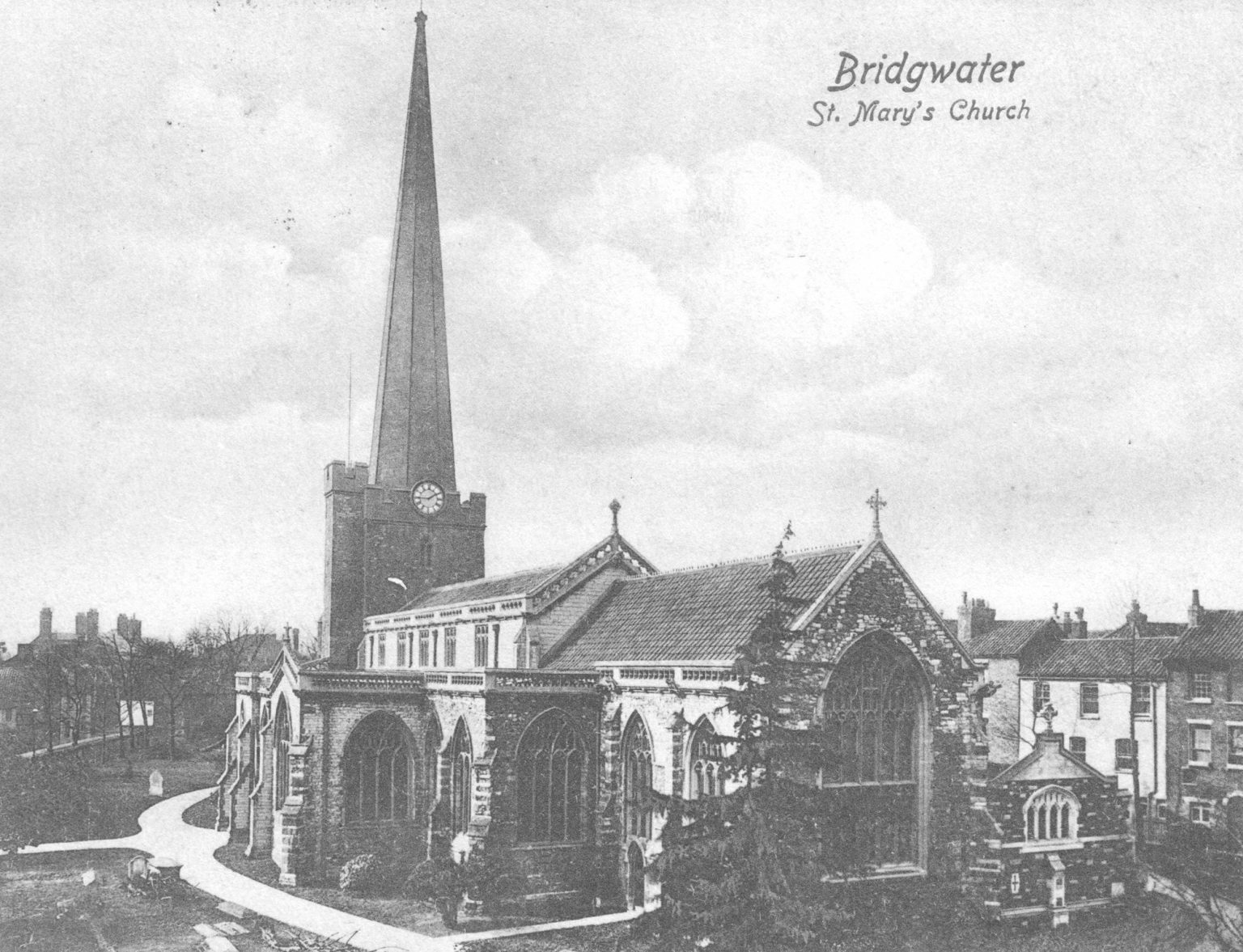
William became an important member of the St Mary’s Parochial Church Council (PCC), acting as treasurer for the Free Will Offering Fund[vii]. As honorary secretary to the PCC, William regularly presented an annual report detailing the various activities of the council and committees during the year.[viii] William’s report would have been prepared with great care and accuracy.
In 1935, William had a very sad year, when in the space of eleven months he had the sad duty of arranging the funerals of both his son Harry and his father, William Esau. (Please see Annie’s biography below for more information about Harry.)
By 1939, William had stepped down from the very time consuming role of churchwarden, but he was still acting as a sidesman. This role is similar to an usher, William would greet people arriving for a service, and hand out hymn and prayer books, take the collection plates round and collect the books after a service.
On the Home Front in WWII
As the country headed into the Second World War in 1939, William, while still working for John Board and Co. was also busy with St Mary’s. He was involved, together with the church, in collecting for the mayor’s Christmas Cheer Fund. The proceeds were then distributed to poor households in Bridgwater.
The meetings of the St Mary’s PCC give a glimpse into some of the extra difficulties faced on the home front during the war. In March 1940 the effects of the black-out on Sunday evenings reduced the congregation for evensong, and the church hall was commandeered for wartime activities[ix]. The vicar attempted to console his anxious congregation, saying that when war had finally broken out, it almost came as a relief after the long period of tension beforehand. ‘Fearful as the operation theatre might be, it was often less exhausting than the nightmare of anticipation and indecision which often preceded facing the facts’. This was still very early days in the war.
The black-out made life difficult for everyone. There were weekly prosecutions of people who had been found to have a light showing at their home, and there were misunderstandings about the use of lights on vehicles. In September 1940, a three year old girl was killed in Bridgwater when her parents’ car collided with a bus. The car was moving very slowly, but had no lights on, while the bus only had side lights[x]. The coroner gave a verdict of ‘misadventure’ but commented that there had been a certain amount of chaos on the roads that evening, because people took it upon themselves to give orders to other road users about lights on cars. The Chief Constable then had to publish the appropriate regulations in the newspapers.
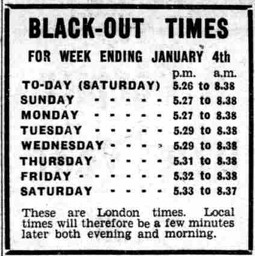
The black-out times were published frequently, as they were adapted to the changing day length. The times listed for January 1940 show the longest times of black-out, corresponding to the shortest amount of daylight in the winter.
Along with many others, William and Annie gave money to the Spitfire Funds, Bridgwater managed to raise £3,000 by September 1940[xi].
In February 1941, the vicar of St Mary’s reported that they had had to pay ‘a considerable sum’ for the black-out curtains required for the church and day school, and for Chilton Trinity Church. In his report to the PCC, William Webber gave the good news that the church had been gifted three stirrup pumps, to help protect the church in the event of fire. The Germans had used fire bombs heavily during 1940, so fire was a serious risk. The meeting greeted this news with cheers[xii]. The vicar said that the last year had been an ‘heroic age in the history of the church and empire. We stood facing the future with fortitude in the unshaken conviction of the ultimate triumph of our cause’. They prayed that the clouds of war would be dispersed before they met again next year, and ‘they would have the opportunity to enter a new life based on truth, freedom and justice.’ Unfortunately there were still some years of war to go through, but the vicar was trying hard to keep morale up.
The black-out claimed another victim in Bridgwater in 1942, when 20 year old Henry Atwell was found drowned in the basin of the dock. He had spent the night fire watching in the timber yard of his employers G. Randle and Sons, which was beside the dock. He left at 6am to go home for breakfast and was expected back for work an hour later but never returned. His hat was found on the edge of the basin, and his body was recovered from the dock later that day[xiii]. At 6am it would still be dark in November, so tiredness and the absence of any light were the likely causes of the accident.
In spite of the difficulties of war, the congregation and the weekly collection of St Mary’s were maintained well. Families wanted to pray for the safe return of their loved ones and the armed forces personnel. By 1944 the vicar was optimistic that the war would end within the next year.
The war in Europe ended on the 8th of May 1945, and by September 1945, William and Annie were gratefully donating to the Bridgwater Legion Memorial Fund, which had already raised over £7,000[xiv].
Damage done during the war was still being replaced a few years later. Railings around the churchyard had been removed in response to Lord Beaverbrook’s appeal for scrap metal to be collected for the war effort in 1940. Unfortunately aluminium was the metal most needed, and much of the other metal collected was wasted. The removal of the railings left the churchyard unprotected, and in 1947, William Webber read out a letter from the Town Clerk, inviting the PCC to discuss the question of providing a wall and hedge around the churchyard[xv].
After WWII
After the war William continued his work for the church, and was again appointed as a churchwarden. St Mary’s Church had three ‘people’s wardens’, meaning that all three churchwardens were elected annually by the votes of parishioners, rather than chosen by the minister. In this role, William often represented the church by attending funerals of parishioners, such as that of the former harbourmaster Captain James Smart in January 1947. Each of these funerals would have taken a significant amount of time out of his working day.
William continued with his work as company secretary for John Board and Co. Ltd into his early seventies. However, he developed a large hernia at the top of his thigh, and had what should have been a routine operation to correct this in 1953. This operation was conducted in Bridgwater Hospital on the 31st of March. Ten days later, William died of a pulmonary embolism, or blood clot in the blood vessels of the lungs. This complication is a known side effect of surgery. In 1953, William would have been encouraged to rest in bed after his operation, but doctors are now well aware of the importance of getting the patient up and moving about as soon as possible. His son William Edwin, had returned from London to be with his father after his operation, and registered the death.
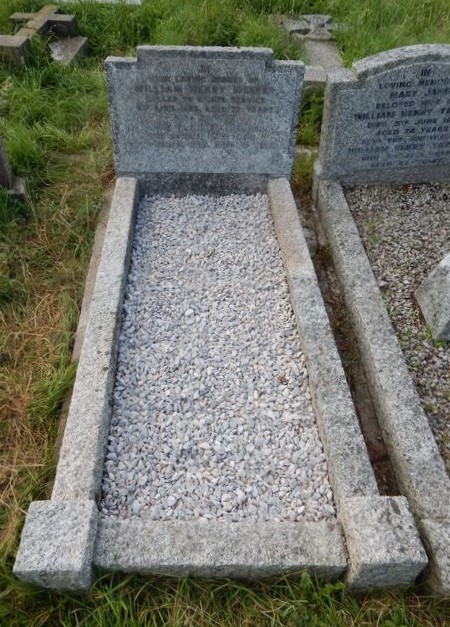
William was buried in Wembdon Road Cemetery, in Anglican Section B 56/247.
Annie Frances Webber nee Vowles 1878 - 1965
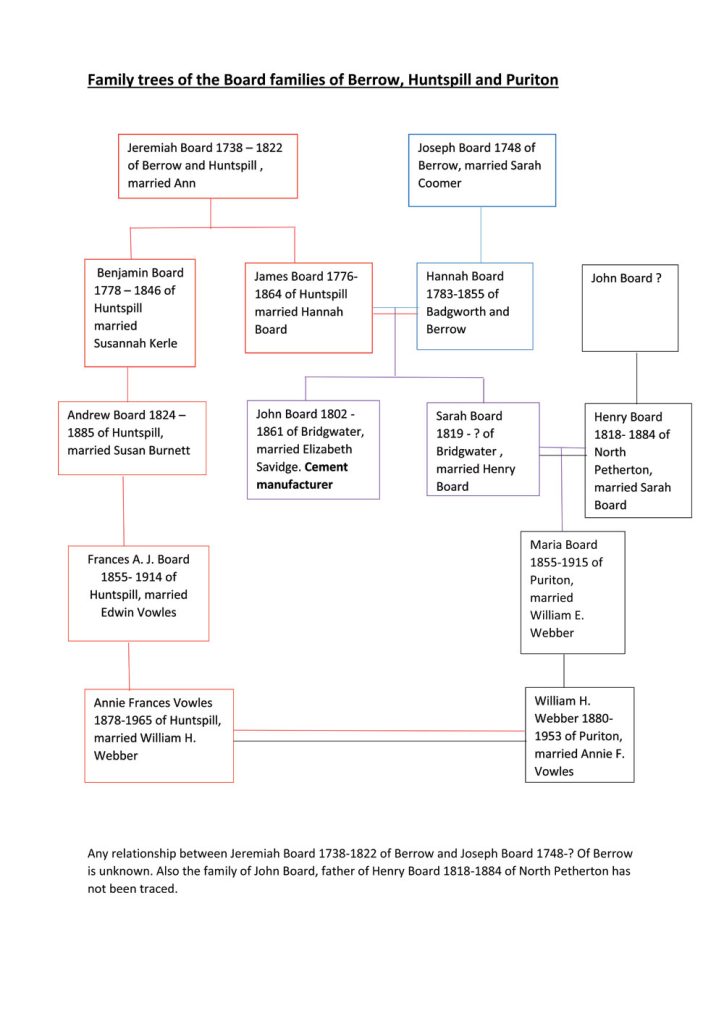
Annie’s parents were Edwin Vowles and his wife Frances Ann Jennings nee Board. Edwin ran a 49 acre farm near the Withy Road, a long country lane which ran between Huntspill and East Huntspill. His wife Frances was a great grand daughter of Jeremiah Board, part of the same family as cement manufacturer John Board.
Edwin and Frances only had two children, Annie and her younger brother Harry, but by 1891 they were part of a larger household as Edwin and Frances also gave a home to a young cousin Alice Hellings. A governess and a companion were also employed, so Annie had plenty of company as she grew up. In 1901 Annie was still with her parents and brother Harry, at 7 Withy Grove, Huntspill.
William Henry Webber and Annie Vowles were distant cousins, as they were both great great grandchildren of Jeremiah Board of Berrow and Huntspill (see Appendix 1 – Board family tree).
They got married on the 31st of August 1909 in the parish church of Huntspill. On their wedding day, William was 29 years old and Annie was 31, a little older than normal for newlyweds at the time, but they may have waited until William Esau retired, and then William Henry could take over his father’s job as company secretary at John Board and Co.
The new couple made a move away from both their family homes, and settled into a house at 49 Wembdon Road, Bridgwater. They had to wait a few years for their first baby to arrive, then William Edward was born on the 21st of October and baptised on the 19th of November 1913, in St Mary’s Church.
Three wartime babies
Their next child, Harry Gordon, was born on the 10th of February 1915 and baptised on the 6th of March 1915, in St Mary’s Church. He may have been known in the family as Hiram, as this name is also shown in brackets on his headstone. The name Hiram is biblical, and indicates how important their faith was to his parents. Harry became very sporty, playing rugby and cricket, and enjoying swimming.
Their third child, a boy called Harold Vowles Webber, was born on the 14th of March 1916 and baptised in St Mary’s Church on the 13th of May 1916. Sadly this little boy died of gastro-enteritis aged 18 months. He was buried in Wembdon Road Cemetery in September 1917, Anglican Section M 28/1265.
William and Annie’s fourth child and their first daughter, Sylvia Grace, was born just before the end of WWI, on the 24th of October 1918, by which time the family had moved from 49 Wembdon Road to number 42. Sylvia was baptised in St Mary’s Church on the 20th of November 1918, a time of great relief and celebration after the Armistice was signed on the 11th of November 1918. Their last child, a daughter called Brenda Frances was born on the 22nd of January 1921. Brenda may have been unwell as a baby, as she was baptised privately on the 10th of February 1921.
The 1921 census showed William Henry, Annie and their two sons and two daughters living at 42 Wembdon Road, Bridgwater. Also with them was an older relative of Annie, called Henrietta Vowles, and a companion help.
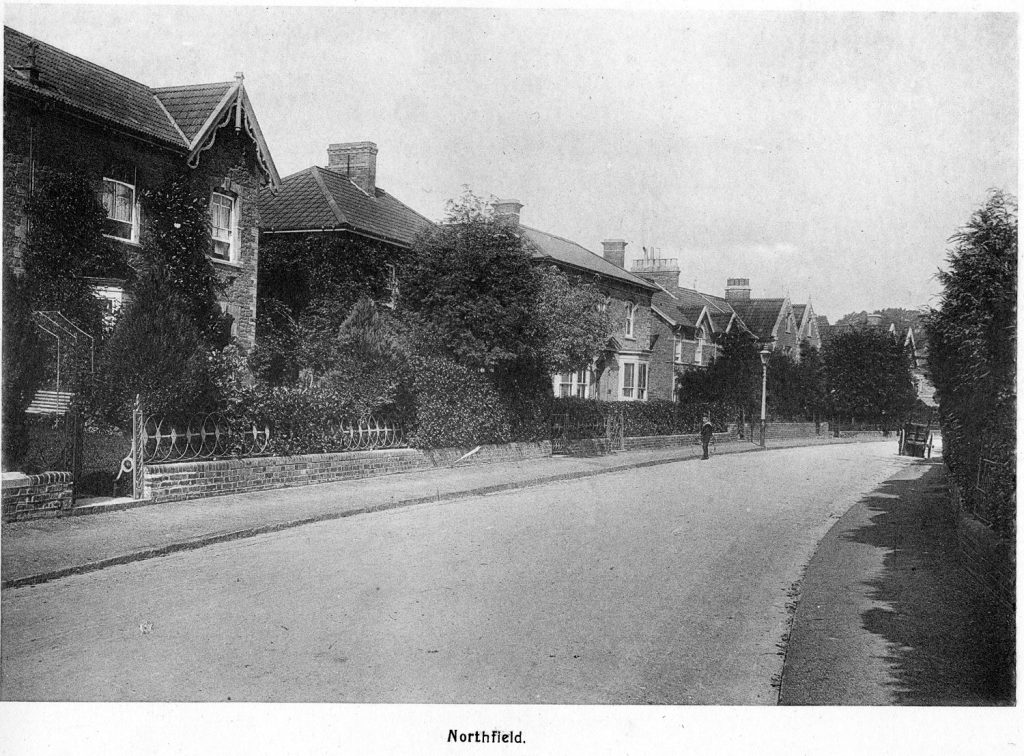
By 1935, the Webbers had moved to 35 Northfield. Their eldest son, William Edwin, had trained as an accountant and had probably already moved away from home. Harry Gordon had started work at the Imperial Tobacco Company as a clerk, and was enjoying playing sports in his spare time. Unfortunately he developed a carbuncle, or cluster of boils, which was not only painful, but which led to blood poisoning. It was before the time of antibiotics, and Harry died of sepsis on the 28th of February at the Drummuir Nursing Home, aged only 20. Harry was buried in Wembdon Road Cemetery, together with his baby brother Harold, in Anglican Section M 28/1265.
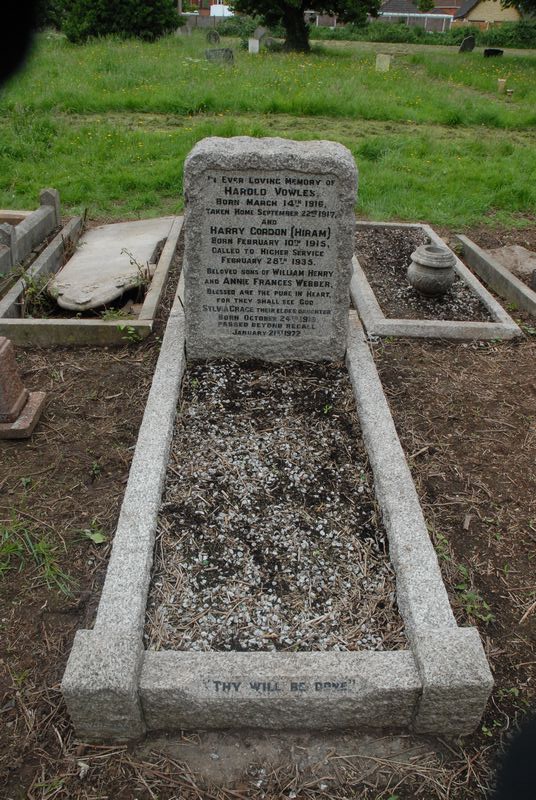
His funeral was reported in the Taunton Courier and Western Advertiser on the 13th of March 1935 as a ‘young sportsman’s funeral’. Several friends and relatives attended Harry’s funeral, but not his two little sisters. There were representatives from the various sports clubs he had been involved with, including several Bridgwater clubs - Rugby Football, Swimming, Cricket and the Old Morganians Rugby Football Club[xvi].
Annie joined in with William in various social activities. She clearly enjoyed playing whist and occasionally won prizes at social events, such as those held by the Bridgwater Bowling Club and St Mary’s PCC.[xvii] She was also quite often reported as attending funerals with William, in his capacity as a representative of St Mary’s Church[xviii].
The census taken in 1939 in preparation for WWII, showed Annie living at home in 35 Northfield, with her husband William still working as company secretary for John Board and Co. Her 21 year old daughter Sylvia was living at home, although was incapacitated in some way and so not working. Brenda, aged 18, was also living at home, but was working as a school teacher. The household also included two 15 year old boys, Richard Thomas and Roger Phillips. There is not enough information about these two boys to explain why they were staying with the Webber family in September 1939, but in any case, Annie had four hungry young people living with her. This would not have been easy in wartime, with rationing, shortages and long queues at food shops.
After WWII
After the war Annie and William continued to live at 35 Northfield, together with their daughter Sylvia. Sometime after William’s death in 1953, Annie and Sylvia moved a short distance to 83 Wembdon Road. This was where Annie died on the 27th of November 1965, aged 87. Annie was buried together with William in Wembdon Road Cemetery, Anglican Section B 56/247.
Sylvia continued to live at 83 Wembdon Road until she died there on the 21st of January 1972, aged 53. She was buried together with her two brothers Harold and Harry, in Anglican Section M 28/1265.
Clare Spicer and Jill Trethewey 31/04/2026
Appendix 1
References
Ancestry.co.uk – records of births, marriages, deaths, census records and some military records.
General Record Office – digital images of death certificates
Friends of Wembdon Road Cemetery – burial records and images of memorials
Somerset HER – historic Ordnance Survey maps
British Newspaper Archive – digital images of the newspapers referred to below.
[i] Children of William Esau Webber and Maria nee Board:- Florence 1877, Alice 1878, William Henry 1880-1953, Sarah 1882, Sidney 1884, Stanley 1885, Victor 1887, Harold 1889, Cyril 1891 and Leonard 1893. All born in Dunball, Puriton.
[ii] Western Daily Press 27 May 1914.
[iii] Taunton Courier and Western Advertiser 19 April 1916
[iv] Devon and Somerset News 18 May 1916
[v] Devon and Somerset News 16 Nov 1916.
[vi] Taunton Courier and Western Advertiser - 04 Dec 1927, 27 Feb 1919 and 07 May 1930.
[vii] A Parochial Church Council, or PCC, is the executive committee of a Church of England parish. It is responsible for the financial business of the parish, and for the maintenance of the church and church hall buildings. The committee includes ministers and lay people.
[viii] Taunton Courier and Western Advertiser 30 Jan 1937.
[ix] The Black-out was imposed by the government in September 1939. The aim was to stop any light on the ground which could show enemy aircraft where to drop bombs. The Black-out was enforced by Air Raid Precautions Wardens (ARP) who patrolled the streets after dark. Black-out curtains were needed on all windows to prevent light escaping after dark.
[x] Taunton Courier and Western Advertiser 21 Sept 1940
[xi] Taunton Courier and Western Advertiser 14 Sept 1940.
[xii] Taunton Courier and Western Advertiser 01 Feb 1941.
[xiii] Taunton Courier and Western Advertiser 07 Nov 1942.
[xiv] Taunton Courier and Western Advertiser 15 Sept 1945.
[xv] Taunton Courier and Western Advertiser 15 Feb 1947.
[xvi] Taunton Courier and Western Advertiser 13 March 1934 and 08 Oct 1938.
[xvii] Taunton Courier and Western Advertiser 21 Nov 1928 and 23 Nov 1932.
[xviii] Taunton Courier and Western Advertiser 28 Feb 1942.