
Richard Hiorns (1785-1875) Master Ironmonger; Sarah Hiorns (1813–1907) nee Shrimpton, his second wife; Maria Shrimpton (1838-1922) her niece and adopted daughter.
Richard Hiorns was a master ironmonger with a shop in the Cornhill in the centre of Bridgwater. He was a town councillor and was in business for over thirty years, but now it is hard to find any trace of him, other than his grave. After Richard’s death, the ironmonger’s business became Shrimpton and Halson and later Halson and Son.
Richard’s nephew Frederick E. Shrimpton (1835-1923) also has a biography on this website.
Hiorns
Hiorns is an uncommon surname which is often spelt or misspelt Hierns, Hirons, Hornes or Irons. When old handwritten records are digitised it may become Hivins, Heven or Heavens. It was mostly found in Warwickshire, both in cities like Warwick, Leamington Spa and Coventry, but also in rural parishes. When Richard was an ironmonger in Bridgwater, another Richard Hiorns (c1789-1845) was an alderman and mayor of Warwick. Other branches of the family moved to London, Gloucestershire and neighbouring counties.
The first mention of the surname Hiorns in Bridgwater was Thomas Hiorns, who invoiced the Dickinson family of Kingweston, Somerset, for ironmongery in 1827.[1] When Thomas left Bridgwater, his younger brother Richard stayed and took over the ironmonger’s shop.
The answers Richard gave for place of birth for the census varied. In 1841 he stated “Yes, born in county”. In 1851 his parish of birth was Bridgwater, in 1861 it was Leamington and in 1871 just Warwickshire. Perhaps he was a busy man and someone else answered for him. Luckily there are some other clues in old wills and documents.
Since the name Hiorns is uncommon, it was feasible to check the digitised wills of the Hiorns family dated after Richard’s birth that are preserved in the National Archives.[2] There was no will left by his father but his mother mentioned Richard with just enough information to identify him. Elizabeth Hiorns (c1747-c1831) wrote her will in 1820 at Leamington Priors, when she was a widow but “of sound mind and memory”. She named as executor “my son Richard Hiorns of Salisbury in the County of Wiltshire ironmonger” and listed her surviving children, including Thomas. Tracing backwards, Richard’s parents were Joseph Hiorns and his wife Elizabeth nee Hughes. Richard was baptised on the 25th September 1785 at Bishops Tachbrook, a village near Leamington Spa. He was seventeen years younger than Thomas and so it could have been Thomas who taught him his trade. Richard must have found work in Salisbury in 1820. He would have another connection with Wiltshire later.
Kiver of Wimborne Minster.
One of the most important decisions required to accumulate wealth was marriage. Business ventures were a gamble and wages only kept the status quo. Inheriting and owning land was best.
Sarah Collins Kiver was born in 1801 at Wimborne Minster, Dorset, daughter of Richard Kiver and his wife Sarah. Richard Kiver owned a timber yard at Wimborne. He died in 1811 and whatever modest sum he left was to be divided between his several children. He specifically stated that his wife Sarah was already well-provided for by her marriage settlement. Mrs Sarah Kiver drowned in the River Stour the following year. Was it an accident or depression? A Coroner’s Inquest determined that there was no evidence of violence. In her will, Sarah’s marriage settlement was left in trust for her two daughters, Sarah Collins Kiver (born 1801) and Emily Kiver (born 1803).
Wimborne Minster is a considerable distance from Bridgwater, but fast forward fourteen years and perhaps the younger Sarah was working as a governess or visiting a friend. In December 1828, Richard Hiorns applied to the Vicar of St Mary’s, Bridgwater, for a marriage licence. Three days later Richard married Sarah Collins Kiver at Burnham-on-Sea. Emily Kiver was a witness. When the Bath Chronicle announced formally that Mr Richard Hiorns and Miss Kiver had married, it told the reader that he was respectable, ambitious and conscious of status.
Bridgwater
Richard took his new wife home to Bridgwater where they lived above the ironmonger’s shop in the Cornhill. By law, once married any assets that a woman owned became the property of her husband.
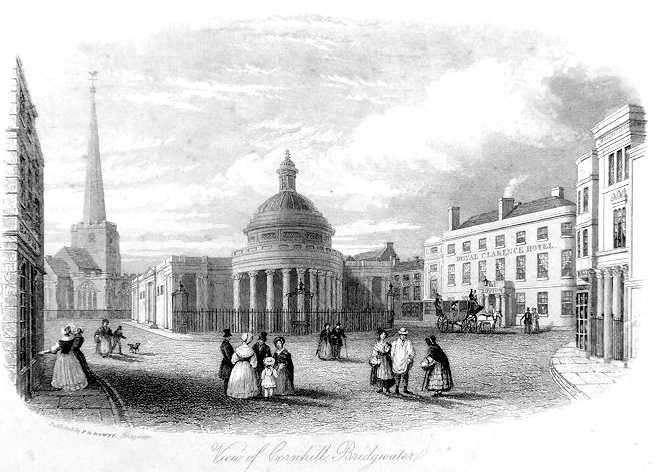
Emily Kiver died of consumption (tuberculosis) at Bridgwater in October 1829 and is buried in St Mary’s churchyard.[3] There is no will but it is reasonable to guess that anything she left went to Sarah and so to Richard. In 1831 it was Richard, not Sarah, who was the owner of a property in Wimborne Minster.[4]
Richard and Sarah had no children and Sarah only lived a few more years. She was buried on the 23rd December 1834 in St Mary’s churchyard with Emily. Sarah and Emily must have spent a lot of time together and so it is possible that Sarah also suffered from tuberculosis. It can be dormant for years even when untreated.
Prior to Richard’s arrival in Bridgwater, the two main retail ironmongers in town were the Axford family and the Thompsons.[5] The Axfords had a shop on the Cornhill and were ironmongers there for nearly a century before the Hiorns brothers rented the premises and took over the business. After 1826 the Axfords were described as merchants rather than ironmongers, which corresponds approximately to the death of Charles Axford (1780-1830). Richard first appears on a ‘List of the Electors of Bridgwater’ in April 1831, along with Joseph Thompson, J. Distin and George Tratt, all ironmongers.[6] J. Distin was declared bankrupt in 1833, but the Thompsons remained formidable business rivals to Richard and his successors.
At the age of fifty-one, Richard decided to marry for a second time. His bride was Sarah Shrimpton, from Marlborough and she was only twenty-three. John Edward Shrimpton (1805-1845) a draper, arrived in Bridgwater about the same time as Thomas and Richard Hiorns. John and Richard were both shopkeepers in the centre of town and both were Church of England, so it is not surprising that they knew each other. Sarah Shrimpton was John Edward’s younger sister and an extra pair of hands to work in the draper’s shop or to help with the children.
Sarah spent her childhood in Marlborough where her father, John Shrimpton (1776-1852), had the Castle and Ball Inn. In 1833 John sold up and moved to the Swan Inn, East Ilsley, and nearby Priors Court Farm, at Chieveley, Berkshire. A son managed the farm while John won the praise of the local residents for the dinners at the Swan Inn. Richard made the long stage-coach journey to Chieveley, where they married in the parish church in April 1836. No-one would have minded the age difference. If a man could support a wife and family, as Richard clearly could, then he was entitled to marry a woman young enough to give him children. For Sarah, it was a chance to be mistress of her own home instead of being financially dependent on her father and brothers.
These were exciting times for anyone with ambitions in local politics. The Municipal Reform Act came into force in August 1835. For the first time, the Bridgwater Borough council was elected by all male ratepayers who had lived in the town for at least three years. Instead of being on the council for life, councillors served a three year term, with one-third to be elected annually. The first Bridgwater Borough council election following the reforms was held at the end of 1835. It was a landslide win to the Liberals. The twenty-four councillors elected were all Liberals and the old, overwhelmingly Conservative corporation was gone. In London, the Morning Advertiser wrote:
“Upon the result of the election being made known at the close of the poll, all the cannon in the port of Bridgwater were immediately fired and kept in a roar of thunder for hours, amid the ringing of bells and general acclamations of the inhabitants throughout the whole town. Thus has fallen this self-elected corporation before the first breath of popular opinion which it encountered.”
And from the Warwick and Warwickshire Advertiser:
“Success has crowned the cause of the people in the west.”
Two years later the story was very different. In the November 1837 elections all nine Conservative candidates were successful. Richard Hiorns was one of those candidates. He was appointed a Trustee of the Market House in January 1839 and later that year his name was mentioned when Conservative Party supporters were planning the next election campaign. In 1840 Richard donated £10 to a fund for a new church in Eastover.[7] However, he served just one term and appears not to have stood for re-election. [8] [9]
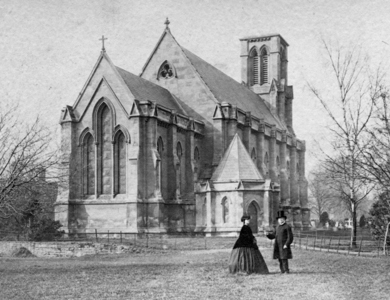
Many family members spent time with Richard and Sarah in Bridgwater. William P. P. Hiorns (1816-1849) was an ironmonger from the London branch of Richard’s family. He was a grandson of Thomas Hiorns and so a great-nephew of Richard. William met a Bridgwater girl named Maria Elizabeth York, who was about the same age as Sarah and probably one of her friends from church. Maria’s father was William Walter York, innkeeper, of the Ship Aground Inn, Eastover. [10] William and Maria married in May 1839 at Redcliff, Bristol. In July 1840, William was back in Bridgwater applying to the Vicar, Rev. Wollen, for a marriage licence and a second ceremony with Maria. Did he skip getting a licence the previous year, making the first ceremony null and void? The young couple moved to London.
A few months later, Richard was advertising for an apprentice:
“WANTED. A respectable Youth as an Apprentice to the General Ironmongery and Oil and Colour Trades. Apply to R. Hiorns, ironmonger etc., Bridgwater.” [11]
Richard had branched into selling paraffin oil and paints as well as traditional iron pots, pans, tools, utensils and other goods, to expand his business. The factories up north were manufacturing more and more household items and farm equipment to fill Richard’s shelves and yard.
Richard and Sarah lived above the shop on the Cornhill. In the same household were an assistant ironmonger; two apprentices and two cook / housemaids. Apprentices and servants traditionally slept in attic rooms. Overall it was a hard-working, organised and mostly adult household. This all changed when Richard and Sarah adopted her nephew and niece. John Edward Shrimpton, a draper in St Mary Street, died of tuberculosis in 1845, leaving his widow Mary with four young children. Mary had little income and Richard and Sarah had no children of their own, so Frederick, 10, and Maria, 7, were taken in by the Hiorns. Richard could afford to send both children to school. As soon as he was old enough, Fred was apprenticed to his uncle.
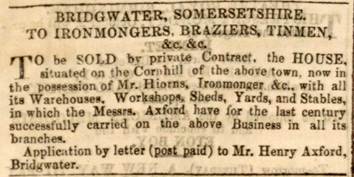
The Ironmonger’s Shop on the Cornhill For Sale in 1843.[12]
Richard had been renting the Cornhill shop owned by the Axford family, but it was put up for sale in October 1843. Richard either purchased the property himself or was able to continue as the tenant. The 1851 census shows the family, including Fred and Maria, living above their ironmonger’s shop in Fore Street, but close to the Cornhill. Whether this represented a move after the sale of the Axford’s property in 1843 or just variation in where the Cornhill began is not clear.
The Drowning of Frederick Dawson Hiorns
Richard and Sarah both came from large families and there must have been many occasions when they opened letters and read of the successes and scrapes of the younger generation. This time was different because reports of Richard’s great-nephew Frederick drowning in the sea at Brighton and of the subsequent inquest appeared in newspapers across the country.
In March 1855, the partnership between Frederick Dawson Hiorns and Thomas Howard, ironmongers and tinmen of Coventry, was dissolved with Frederick continuing in the business and assuming all debts. [13] In June 1855 Frederick was officially bankrupt.[14] He left Coventry and by mid-1856 found work as an ironmonger’s assistant in Jermyn Street, central London.
Frederick was a twenty-six year old single man and no-one was surprised when he said he was spending a long weekend in Brighton with friends. He was employed there before he moved to Coventry. He took the excursion train on the Saturday evening after work and on Monday afternoon took tea with a friend. It was a mild September day and he told his friend he would bathe again before catching the train home. Brighton had a shingle beach which dropped steeply not far from the water’s edge, especially at low tide. A swimmer could quickly find himself in deep, churning water. Later that evening a man’s clothes were discovered placed on a bathing machine. The letters and papers in the pockets identified them as belonging to Frederick. While one honest passer-by went for the constable, a thief stole the silver watch and gold chain but left a purse containing nearly six shillings. Frederick was never seen again.
Richard had many great-nieces and nephews and probably didn’t know the London branch of the family very well. However, with the same unusual surname he and Sarah could not avoid the polite enquiries of friends and their condolences. There were very strict rules of mourning etiquette in Victorian times. For a great-nephew the mourning period was four to six weeks and black or dark colours were worn. Richard and Sarah could go about their usual activities except attending balls or weddings or similar celebrations would be frowned upon.
Six weeks later the naked body of a man washed up on the Essex coast. Frederick’s brother Gardiner Hiorns had previously placed missing person advertisements in the papers. He was contacted by letter and journeyed to Walton-on-the-Naze to make the identification. Gardiner thought the badly decomposed body was Frederick, but the coroner’s finding was a person unknown. The local parish paid for the burial but Gardiner paid for the grave to be dug deeper.
Another young relative, ironmonger Ambrose Henry Shrimpton (1839-1859), came to stay with Richard and Sarah and possibly worked there too. He was Sarah’s nephew. Ambrose was ill with tuberculosis for twelve months before he died in January 1859 and was buried in the Wembdon Road Cemetery.
In July 1859, the newspaper headlines across the country shouted, “Is He Dead or Living?” For Richard, opening his newspaper to read that would not have been pleasant. Frederick Dawson Hiorns had taken out three injury and accident insurance policies, each for £250. One was with the Railway Accident Insurance Company who refused to pay on the grounds that satisfactory proof of the death and of the accident causing death had not been provided.
Frederick’s executors, his sister Mrs Julia Trew and his brother Gardiner, sued the insurers, which resulted in the attention-grabbing headlines. The Court of the Exchequer found for the insurers, so Julia and Gardiner were forced to drop the lawsuits against the other two companies as well. “What could be easier than leaving his clothes on the beach and disappearing?” The Lord Chief Baron said there was insufficient evidence of death or injury and that Frederick had put himself in harm’s way by bathing on an open beach. [15]
Retirement
Richard turned seventy-five in 1860 and in the census the following year, Frederick Shrimpton was the head of the household and Richard was retired. Richard and Sarah and their adopted daughter Maria moved to a house in Blake Street, where they had a live-in cook and a housemaid. Another niece about Maria’s age, Fanny Shrimpton, stayed with them.
Sarah’s brother Charles Shrimpton (1815-1871) was a chemist and druggist who provided his elderly parents and unmarried sisters with a home in Cheltenham for many years. Sarah could visit them in Cheltenham and later, when they moved, at Wells. Mary was blind in her old age and soon there was only Charles and one of his sisters, Maria, to care for a frail nonagenarian. In May 1868 Charles married Richard’s great-niece Lucy Hiorns (born 1832) at Wells. Lucy, a schoolteacher, was from the London branch of the family and was the youngest sister of William P.P., Gardiner and Frederick. Shortly after, Lucy’s sister Charlotte Hiorns married Charles’ brother Albert Shrimpton. Charles and their elderly mother both died in 1871.
Richard died aged 89 on the 30th August 1875 at home in Blake Street. That was considered very old age in the 19th century. He was buried in the Wembdon Road Cemetery.
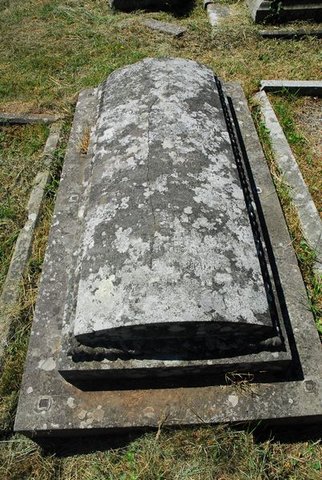
Richard left just under £6,000 which went to Sarah except for specific bequests to his executors and the following great-nieces and nephews:
- Elizabeth Duckett of Bishops Tachbrook £500 (granddaughter of Richard’s sister)
- Henry Hiorns of Penzance £300 (retired ironmonger and son of Thomas)
- Lucy Shrimpton £300 (nee Hiorns, wife of Charles, granddaughter of Thomas)
- Charlotte S. Shrimpton £200 (nee Hiorns, wife of Albert, granddaughter of Thomas)
Sarah and Maria
Sarah was only sixty-two when Richard died. She remained in Bridgwater but moved with Maria to Salome Villa, Northfield. The Church was the centre of her social activities, as it was for many women. In 1877 Sarah donated 10s 6d to the public subscription for a new organ for Holy Trinity Church. In 1890, Sarah was treasurer of the Bridgwater branch of the Ladies Association of the Church Missionary Society for Africa and the East. [16]
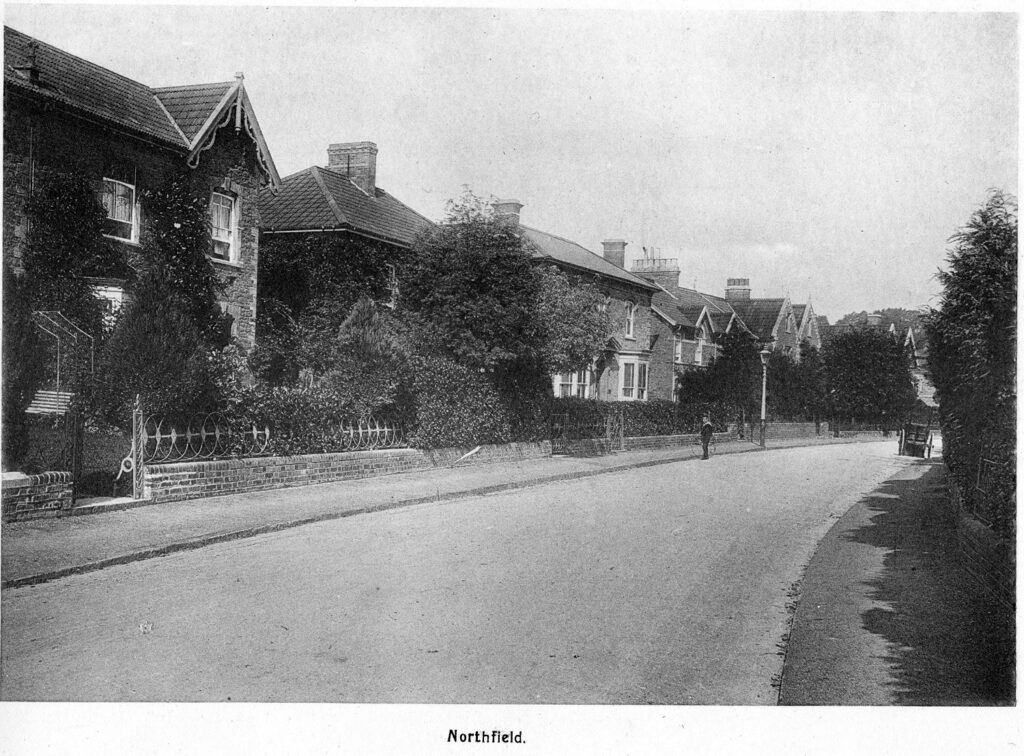
Sarah surely had a hand in the care of her elderly mother and in arranging the two Shrimpton - Hiorns marriages that followed her own.
In July 1897 Sarah and Maria enjoyed a summer holiday at Weston-Super-Mare. [17] In May 1906, Sarah’s youngest brother, Albert Shrimpton (1820-1906), was staying with her at Salome Villa. He had been a draper in Reading and Reigate and was widowed and living in retirement in Bristol. Albert died on the 30th May 1906 at Bridgwater and is buried in Wembdon Road Cemetery with the sister who helped care for their mother, Maria Shrimpton (1809-1892).
Sarah died on the 16th March 1907 aged 93. She was buried with Richard.
Maria Shrimpton, the adopted daughter, had been the carer for her elderly aunt all those years. It is safe to assume that Maria was also a churchgoer. She moved to 26 Victoria Road before World War I and lived her final years there with a companion help. Maria died aged 83 on the 20th February 1922 and is buried with her adoptive parents.
Postscript
US census records are now indexed and online. The first entry in the 1865 Census of Newark Valley, New York State, is for Frederick D. Thorns, 36, a merchant who was born in England. He had a wife and three young children. The other family members at the same address were his sister Julia J. Trew and her daughter; and his younger brother Richard Hiorns and his two-year-old son. Frederick D. Thorns was a real estate agent and he died in North Carolina in 1911.
by Jillian Trethewey and Clare Spicer 15/8/26
[1] Somerset Archives
[2] PCC (Prerogative Court of Canterbury) wills are preserved in the National Archives, Kew, and are listed in the online catalogue. Usually PCC wills can be downloaded from the website.
[3] Salisbury and Winchester Journal 2 Nov 1829
[4] Poll Book, Dorset Election 1831. Published at Dorchester in 1832. Google books.
[5] Blake Museum collection. List of the Electors at the Bridgwater Election June 9th, 1826.
[6] Blake Museum collection. Bridgwater Election 1831. A List of the Electors who polled April 30 and May 2.
[7] Proceedings connected with a Proposal made by the Rev J. M. Capes M.A. for erecting a church in Eastover, Bridgwater. Published by the Committee. Bridgwater. 1840.
[8] Somerset County Gazette 5 Jan 1839
[9] Dorset County Chronicle 21 Nov 1839
[10] Bridgwater Poll Book. 1846. Maria’s father William York may have been the man of that name who owned the York House and Counting-House in Bridgwater in 1846.
[11] Salisbury and Winchester Journal 23 Sept 1839
[12] Aris Birmingham Gazette 2 Oct 1843
[13] Coventry Standard 23 Mar 1855.
[14] Birmingham Journal 25 June 1855.
[15] Illustrated Berwick Journal 16 July 1859
[16] Proceedings of the Church Missionary Society 1889-1890. London. 1890. Google books.
[17] Clevedon Mercury 24 July 1897