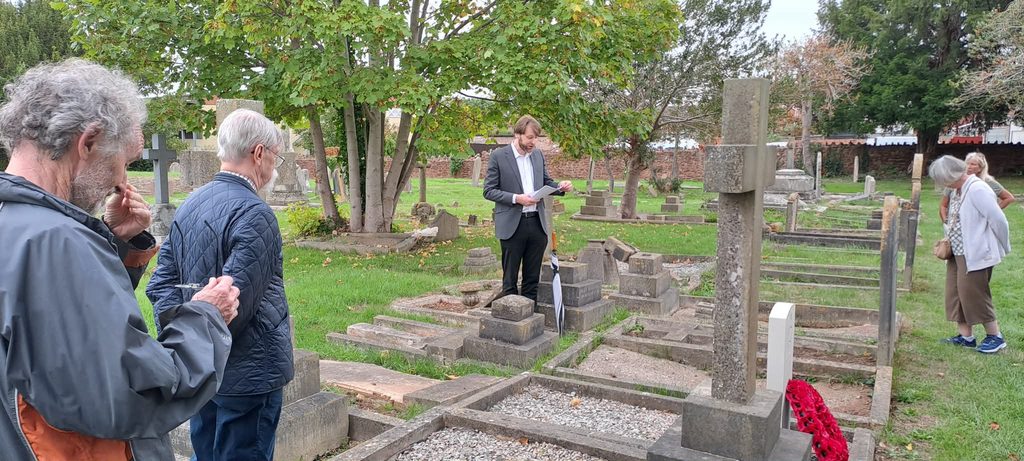
Today was Heritage Open Day in the cemetery today (13 September 2026) so we held a tour. Rita and Alan were in early to get the bunting and little flags set up, which had been provided by Bridgwater Town Council. Although the sky looked menacing and there were a few spots of drizzle, the weather held out and was mostly ok.
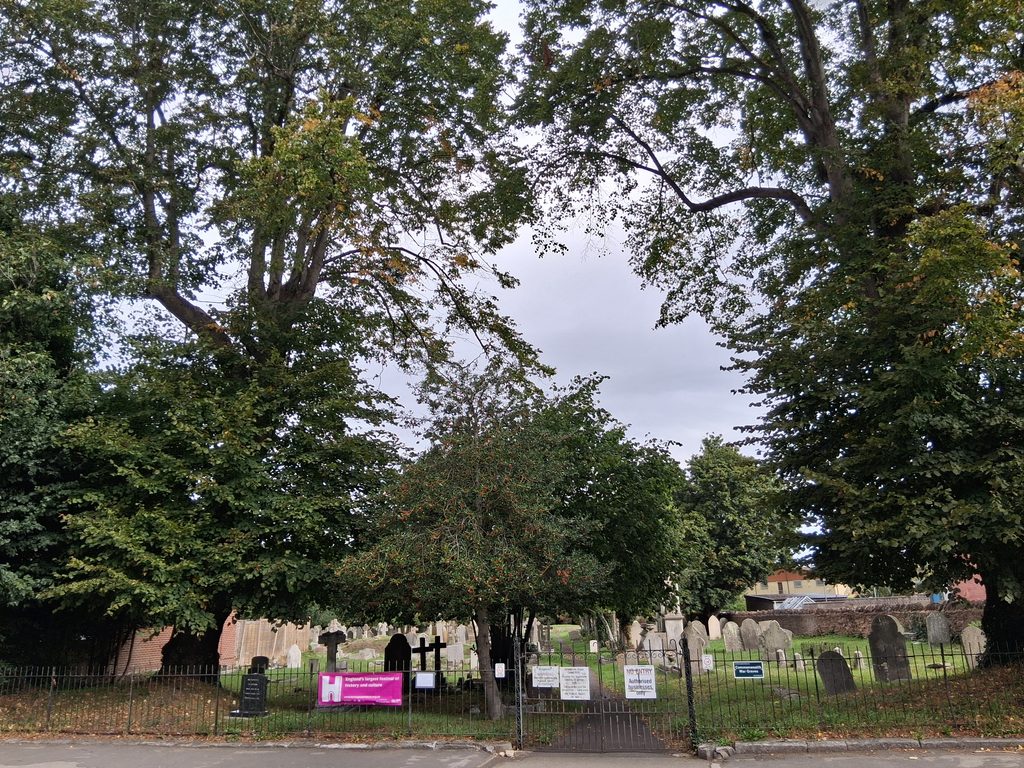
Miles started the tour at half ten, starting at the Dissenter Chapel, where he gave a brief history of the cemetery and showed some pictures of the cemetery from 1864, showing how much things had changed. Pointed out here were the Symons, Board and Carver memorials, with special mention of Edith Dukes, a remarkable woman and wife of the Congregationalist Minister. She was the first woman to speak publicly to many local organisations, and her children included Ashley Dukes, the only person in British history to be knighted solely for his work as a spy.
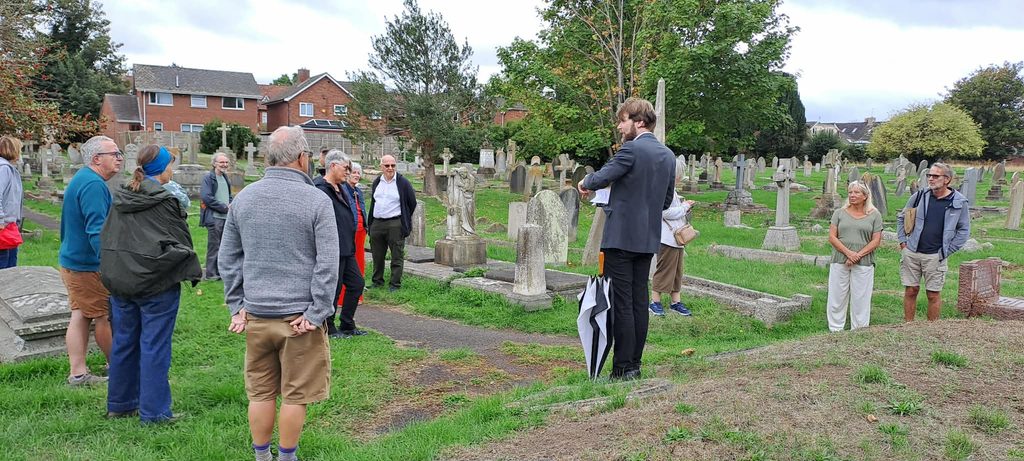
Next they moved onto the top corner of the cemetery and talked about the Browne Mausoleum (with George Lewis Browne who was on HMS Victory at Trafalgar) and the Spiller Cairn. This pile of rocks remembered the remarkable Spiller sisters – Kate being one of the London Nine who were pioneers in attempts to let women have degrees. She also battled the brickyard owners about the need to give children an education.
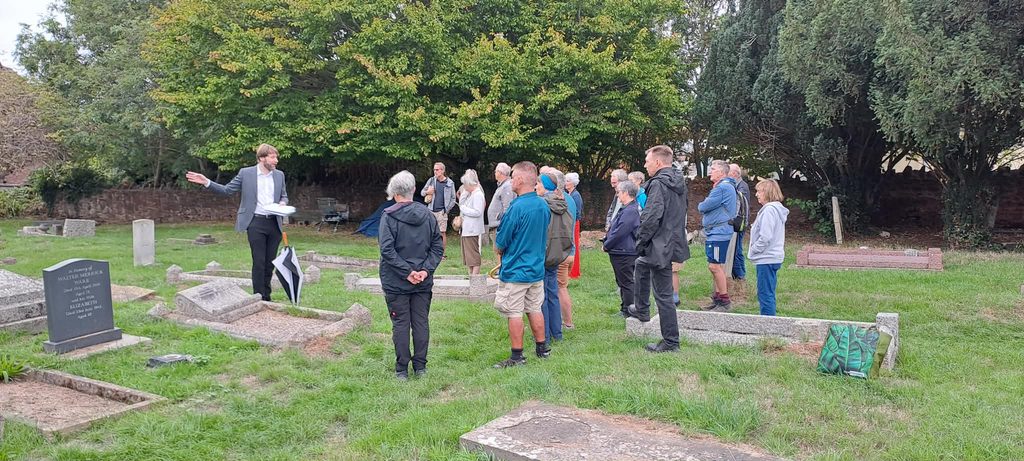
They moved on past the Crocker memorial, which had once been a holly tree, and had taken months for the volunteers, District Council and Fine Memorials to put right. They passed the Smith and Squibbs memorials, the latter remembering Abraham Squibbs, a noted Bridgwater artist and photographer. It was also a moment to reflect on how much work it had taken to clear the massive bramble bush that had once taken over this part of the middle of the cemetery.
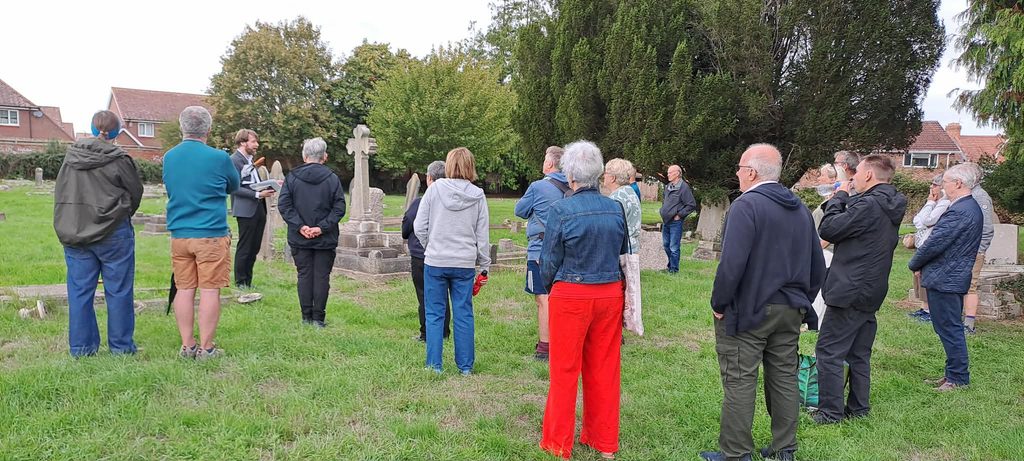
They then reached the west side of the cemetery, to talk about Nellie King, who ran the Royal Clarence Hotel and was very popular in the town.
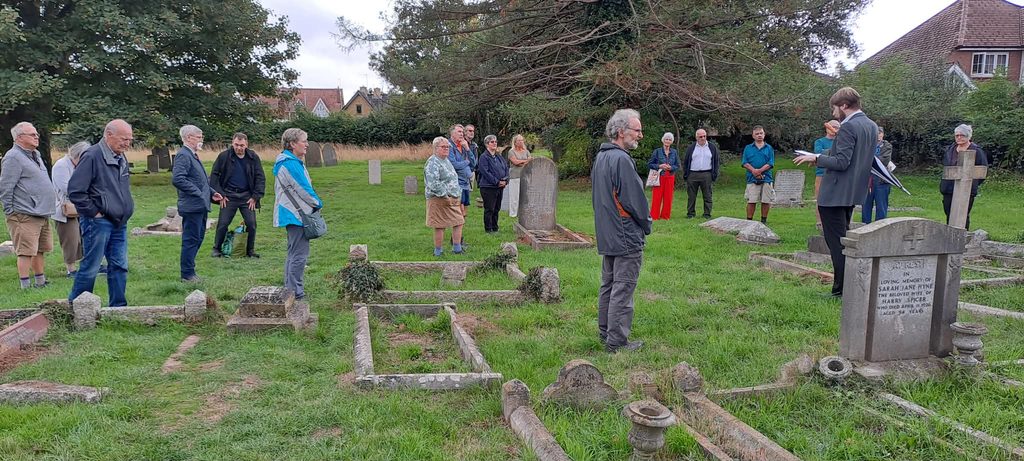
Next the group moved over to the Pauper ground, to learn about Josphine Clofullia, P.T. Barham’s bearded lady.
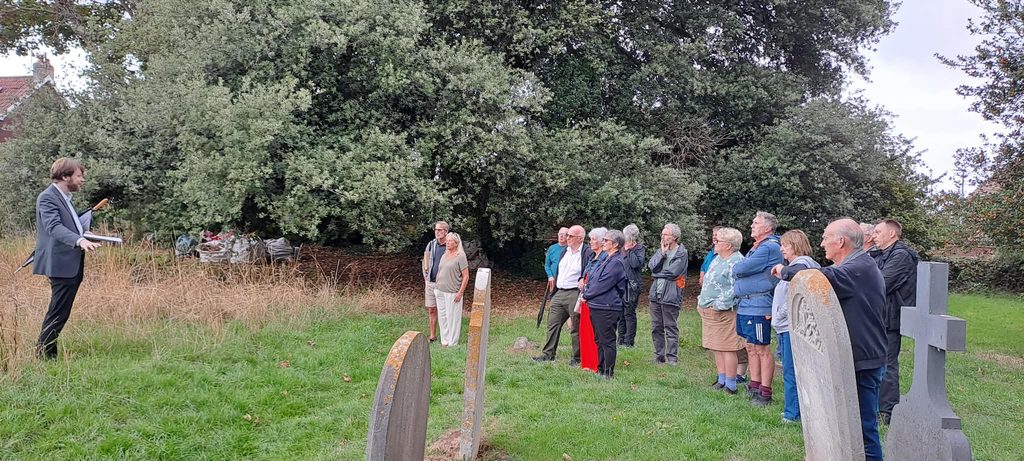
Passed here they stopped to note the Murrant memorial (father to Breaker Morant, subject of an Edward Woodward film), the Burrington memorial (an important impressionist artist) and the Cyril Ricks cenotaph, a victim of the sinking of the Titanic.
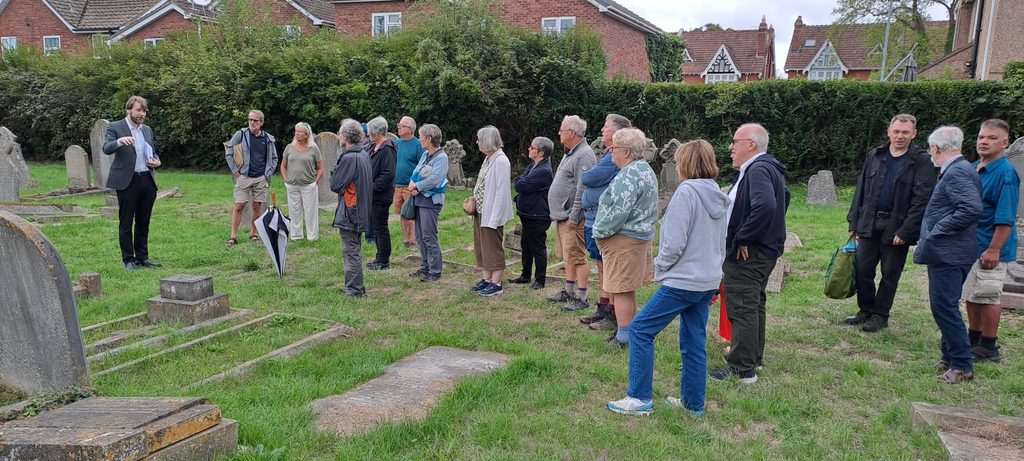
Not far from the Anglican chapel, the Creedy Angel was the point to reflect on the hard lives of the Crocker sisters, who were thrown into the Workhouse after their mother died and father lost control. A slightly happier story came next with the story of Gertrude Gregg, a woman who adventured to Argentia as a noted singer.
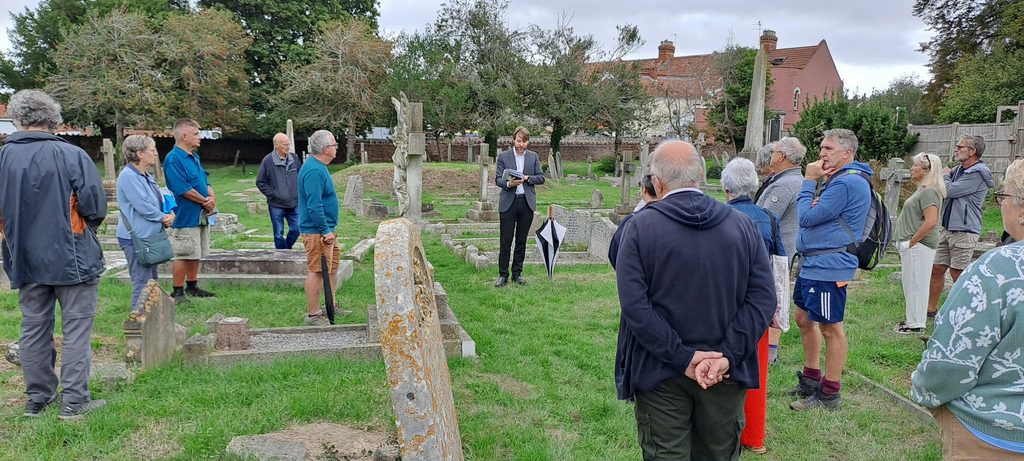
The tour ended with two very special memorials.
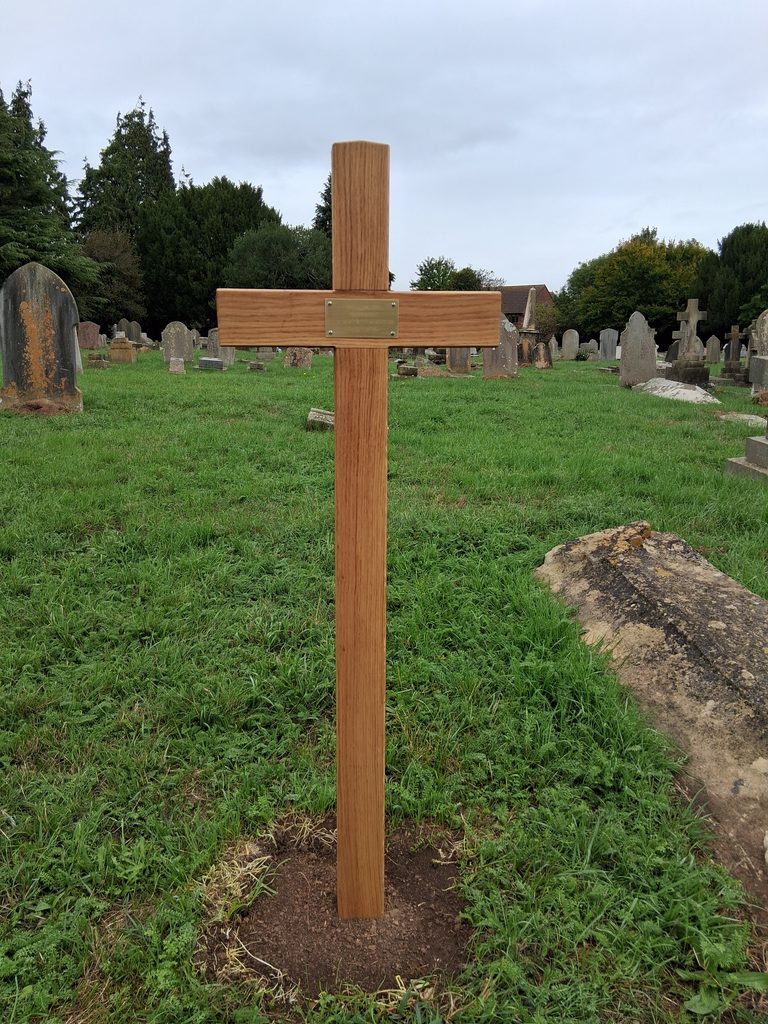
Miles recounted the story of George David, a 17-year-old from Somerset who fought in the thick of the battle of Waterloo, facing cannonballs, cavalry and the Imperial Guard. He then faced convicts in Australia, served in India and finally settled in Bridgwater. When the people of Bridgwater learned he had been at Waterloo, they had raised a sum of money for him – George then used that money to buy himself a burial plot in the cemetery. He proudly placed a wooden post on the spot with his initials. Peter Randal had first found a mention of George, then Clare Spicer and Jill Trethewey had uncovered his full story. Alan, Rita and Miles had then worked out where he was buried (his name being misspelled ‘Davis’ in the register) and so the Friends thought he deserved his wooden memorial again. Alan then made an appropriate memorial cross with some beautiful oak kindly supplied by Taunton Timber and then finished with a brass plaque. We’d not asked Taunton Timber for it: when Alan was going to pay the team there were so impressed with the story they were keen to support the making of the memorial. After George’s life story had been told, Alan unveiled the new memorial to everyone present. It’s a very fitting tribute to this Waterloo Veteran.
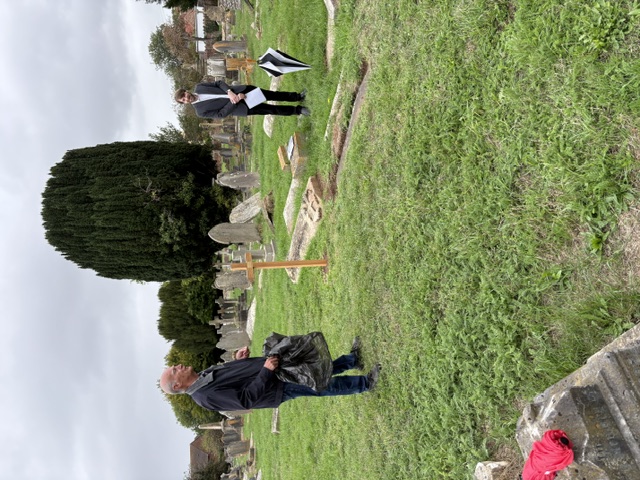
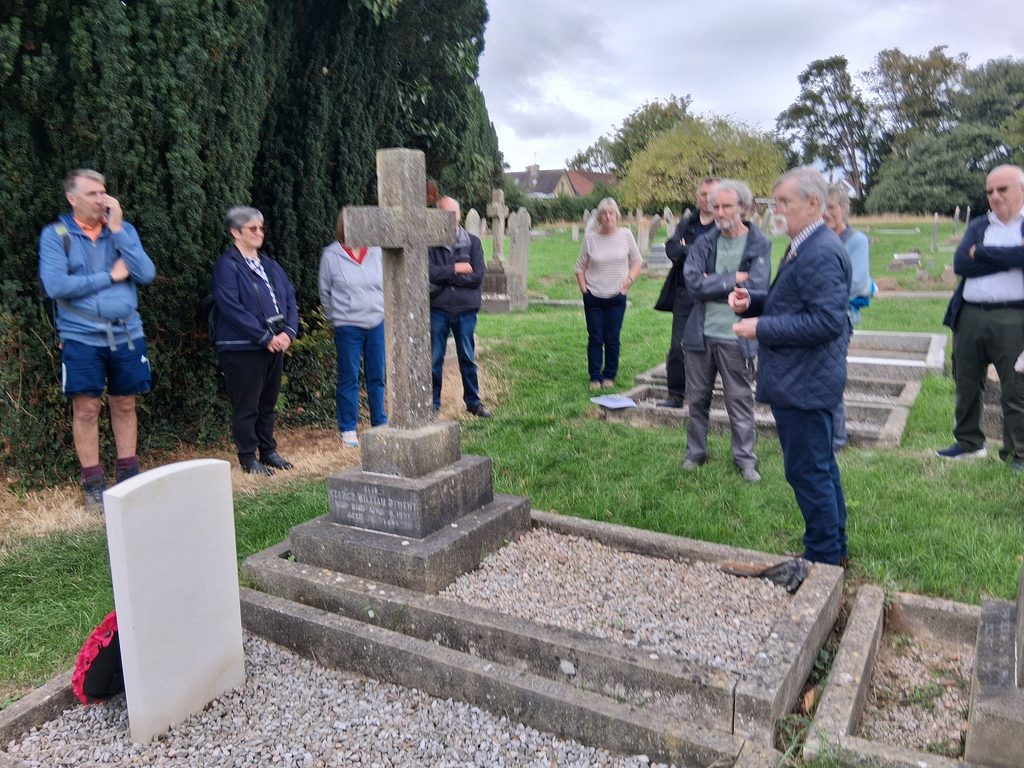
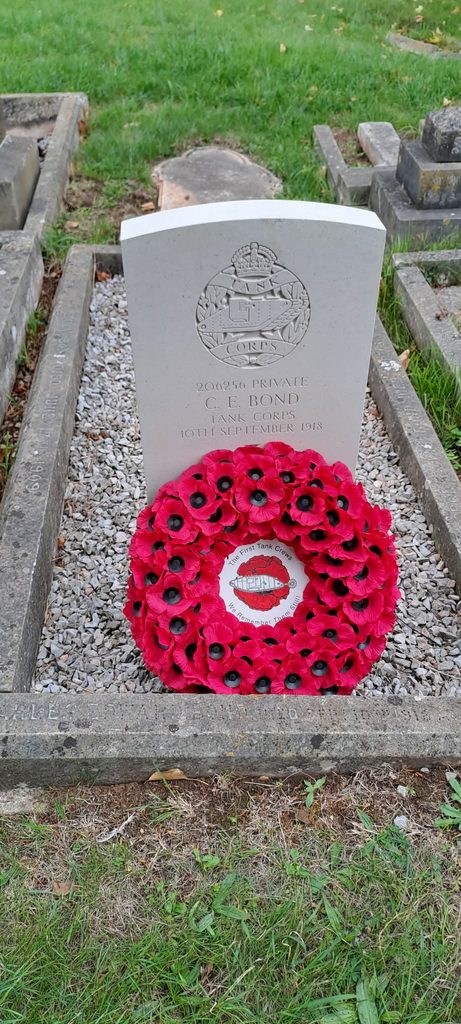
The final stop on the tour was nearby. This year the Commonwealth War Graves Commission had erected a new memorial on the grave of Charles Edward Bond. He was remembered on the town’s war memorial, but had never got his white headstone. Stephen Pope had come all the way from Hampshire today, and told everyone about Charles’ service in one of the very first tanks, in the very first tank actions of the First World War, at the Battle of the Somme in 1916. Although Charles had survived the battle, he caught a terrible lung infection, and ultimately died in Bridgwater. Charles died on 10 September 1918. He was buried on 13 September, exactly 108 years to the day of the tour. So this seemed a very appropriate and poignant point to end the tour, with a moment silence in his memory. Stephen had put an awful lot of work into making sure Charles was properly remembered, and he had laid a poppy wreath on the new stone, the Friends are very grateful for all he has done.