
Thomas Smith (1853-1911) a carpenter; Elizabeth Smith (1853-1935) nee Sealy, his wife; Elizabeth Ann (“Bessie”) Smith (1874-1966) their daughter, a schoolteacher
Thomas was a carpenter, gate and hurdle maker in Bridgwater who married a local girl, Elizabeth Sealy. He and his family benefited from social reforms like compulsory education and the years of peace in the late 19th century. Their daughter Bessie taught generations of children in Bridgwater.
His father James Smith (1827-1884) also has a biography on this website.
Thomas was born on October 5th, 1853, near the Pig Market (Penel Orlieu) Bridgwater. His parents were James Smith (1827-1880) and Ann, also called Hannah, nee Brewer (1831-1877), from nearby Spaxton, and all the rest of their children were born in Spaxton. James was a pig dealer and pigs were bought and sold along with cattle at the market in Penel Orlieu. Whether it was for St Matthew’s Fair the week before, to help her husband, or to stay with her mother for the birth, Ann was visiting Bridgwater with James when Thomas arrived. He grew up in Spaxton with a younger brother Henry and two younger sisters, Harriet and Lucy. By 1871 Thomas was back in Bridgwater living with his Brewer grandparents.
Thomas married Elizabeth Sealy in April 1873 at Holy Trinity Parish Church, Bridgwater. He was a labourer, but probably already working with his Uncle Giles Randle, a master carpenter, and learning the trade. Thomas and Elizabeth were soon the parents of four daughters. The eldest was baptised Elizabeth Ann Smith at Holy Trinity in 1875 but was ever after called Bessie. Their family home was at 15 Silver Street, quite close to St Mary’s Church and the centre of town. Thomas found work as a carpenter, perhaps with his uncle or perhaps building the houses needed as the town’s population grew. Bessie, Kate, Florrie and Annie all went to a local school as education had become compulsory for all children. Thomas’s brother Henry Smith was an engine-driver at a sawmill in Bridgwater and he also was probably trained by Giles Randle. Harriet was married to a handsome mariner, William Coleman Hawkes, and was living in Somerset Place. Lucy, a charwoman, died in her early twenties.
At the beginning of the 20th century, Thomas was doing well. He was a master carpenter, meaning that he employed assistants. Bessie and Florrie were both schoolteachers, Kate was a dressmaker and Annie was helping her mother at home. In 1909, Henry Smith was visiting friends in Provident Place. He went into their garden but didn’t reappear. He was found collapsed on the ground and it was too late to help him. Henry was fifty-four and at the inquest, it was determined that he had died of an aneurysm of the heart. It must have been a shock for Thomas and Elizabeth and their family. Twenty-five years had elapsed since the death of James and so Henry was buried in a new grave in the Wembdon Road Cemetery.
Soon Thomas also developed health problems. By mid-1911 he was working from home, making gates and sections of fencing called hurdles. Farmers used hurdles to fence off sheep and cattle pens for instance. A hurdle had a wooden frame of the desired size, with sturdy withies (willow tree shoots) as upright struts, called sails, spaced about a hand’s breadth apart across the frame. Small, thin withy shoots, called spraggly sticks, were then woven horizontally. It was similar to weaving a withy basket, except that the spraggly sticks were too short for basket work.

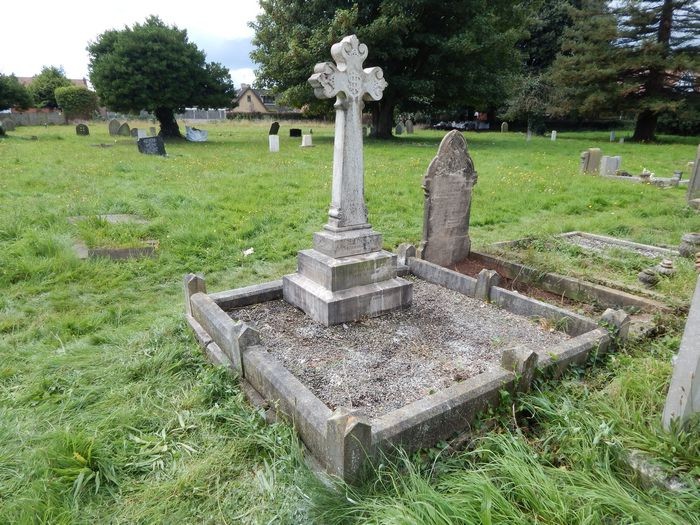
Thomas died in September 1911 after being ill with abdominal symptoms for fourteen days. He was buried in a new family plot close to his brother Henry. The widowed Elizabeth and her eldest daughter Bessie moved to 118 Taunton Road, Bridgwater. Bessie was an assistant schoolteacher at St John’s School, Eastover, which was originally established by the Church of England as a National School. Bessie taught elementary school children in Bridgwater for many years.

Kate had married and was living in Bridgwater with her accountant husband Arthur Bax and their daughter Kathleen. During World War 1, Florrie moved to London, married a soldier and had two daughters. Annie married Henry Shipp, the head gardener at Brymore, Cannington.
Mrs Elizabeth Smith died at home in 1935 of an aortic aneurysm. She was buried with Thomas.
At the outbreak of World War 2, Bessie and Florrie were living two doors down from Annie’s home in Cannington. Bessie had retired, but Kate’s daughter Kathleen Bax taught at the Albert Street (Friarn) elementary school, so the family tradition of teaching continued. Bessie died in 1966 aged 91 after a long career as a teacher and many years caring for her parents. She was buried with her parents in the Wembdon Road Cemetery.
by Jillian Trethewey and Clare Spicer 7/1/26
With special thanks to Carol Morse.